
What Care Card Should I Include When I Gift or Sell the Board?
Include a single A6 card with six things on it: hand wash only, dry standing on edge, oil weekly for the first month and monthly after that, food-grade mineral oil or a mineral oil and beeswax paste, never the dishwasher and never a soak, and the exact species you glued up. The species line is the one most makers skip, and it is the one that matters for a buyer with a tree nut allergy or a customer who wants to know what is against their food. Everything else on that list exists because a board that goes through a dishwasher comes back with open glue lines, and the person who gets the complaint is you.
A cutting board is the rare handmade object that the buyer can destroy in one evening without knowing they did anything wrong. Twenty minutes in a dishwasher at 65°C, and an end grain panel that took you five hours comes out with hairline gaps along the glue lines and a surface that feels like a washboard. The person who did it will not blame the dishwasher. They will message you about the board that "fell apart".
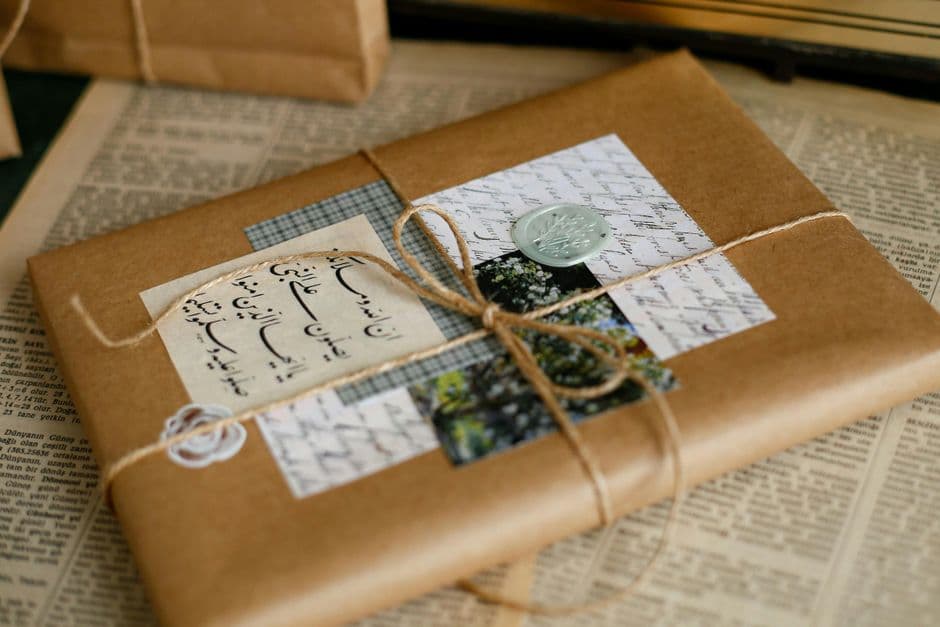
The card is cheap insurance against that message. It also happens to be the piece of the package that people photograph and keep, which is why a boring printed slip in a serif font does more for repeat orders than another coat of finish nobody can see.
Why does the card change the outcome?
Most damage to a wooden board comes from water and heat, in that order, and both arrive through habits people already have. They rinse a plastic board and prop it in the sink. They run everything through the dishwasher because everything else in the kitchen survives it. Neither habit is unreasonable, and neither has ever been corrected for them, because factory boards come in shrink wrap with no instructions at all.
There is a second reason, and it is the one that protects you commercially. When a board cups after three months and the buyer has a card in the drawer that says "dry it standing on edge, never flat on the counter", the conversation is about what happened rather than about a refund. A card in the box turns most of those messages into a question rather than a claim, and printing one costs about 20 cents a unit.
What belongs on the front of the card?
Six lines, no more. Anything longer stops being read at the second sentence, and the rules that actually save the board are the short ones.
| Rule | The reason behind it, in one line |
|---|---|
| Hand wash in warm water with dish soap, then rinse | Soap and water are enough; a scrub brush handles the rest |
| Dry it immediately, then stand it on edge overnight | A board dried on one face only takes up water unevenly and cups |
| Never the dishwasher | Sustained heat plus water opens glue lines and raises the end grain |
| Never leave it soaking in the sink | Ten minutes is fine, an hour of standing water is not |
| Oil it weekly for the first month, then monthly | New end grain drinks oil far faster than a flat-grain board |
| Cut on it, do not carve on it | Cleavers and bone saws are what split a board along a glue line |
The last one gets left off most cards, and it is the rule that actually gets tested. End grain forgives knife work beautifully, which is the whole point of the construction, and it does not forgive a chopping motion aimed at a chicken carcass with a heavy blade.
What is the real oiling schedule?
The old shop rule is "once a day for a week, once a week for a month, once a month for a year, then once a year". It sounds like folklore and it is roughly right, because it tracks how a fresh end grain surface takes oil. A newly finished 40 mm maple board absorbs a surprising amount in the first few applications and then slows sharply.
| When | How often | Roughly how much on a 300x400 mm board |
|---|---|---|
| First week | Daily | 15 to 20 ml per coat, wipe off what is still wet after 20 minutes |
| First month | Weekly | 10 ml |
| After that | Monthly, or when the surface looks pale and dry | 10 ml |
The visual test is worth putting on the card in place of the schedule, since nobody keeps a calendar for a cutting board. Splash a few drops of water on the surface. Beading means the finish is intact. Water that darkens the wood within a second or two means it is time to oil.
Which oil do you tell them to buy?
Food-grade mineral oil, sold as butcher block oil or as USP mineral oil at any pharmacy, or a paste of mineral oil with beeswax at roughly four parts oil to one part wax. Both are cheap, neither goes bad, and a 500 ml bottle lasts a board for years.
Say explicitly what not to use, because this is where well-meaning people cause trouble. Olive oil and any other kitchen cooking oil turns rancid inside the wood, and a board that smells sour cannot be rescued by sanding the top 0.5 mm off it. Write "no olive oil" on the card in the same size type as everything else. I would rather look pedantic than refinish a board a year later.
If you are selling and want to remove the decision entirely, tape a 30 ml bottle of mineral oil into the box. It costs a couple of dollars, it doubles as the thing that makes the unboxing feel finished, and it means the first oiling actually happens.
Do you have to list the species?
You should, and for a reason that has nothing to do with marketing. Walnut is a tree nut, and while the allergenic proteins live in the nut rather than the timber, plenty of allergy households will not put a walnut board in the kitchen, and they are entitled to make that call before they unwrap it rather than after. The same goes for exotics people ask about by name. Padauk and cocobolo are known skin sensitizers for woodworkers handling dust, and even though a finished sealed board is a different situation entirely, a buyer who reacts to rosewood dust wants to know what is on their counter.
So the back of the card carries a short line: "Hard maple, black walnut and cherry, finished with food-grade mineral oil." Add the finished size in both units while you are there, because everyone who receives a board asks how big it is, and half of them will want a replacement in the same size in five years.
On the legal side, there is no federal labelling requirement in the United States for a handmade wooden cutting board the way there is for food or cosmetics. Local rules and marketplace policies vary, so if you are selling at volume it is worth ten minutes with your state's cottage industry guidance rather than taking my word for it.
Where the card comes out of the project file
Everything the card needs is already in the project you drew: species, finished dimensions, the finish you specified, the date you glued it up. Endgrain Studio keeps those with the pattern, so the sale-prep card pulls the species list and the size straight out of the saved project instead of being retyped for every order. For repeat orders it also means the card matches the board, which stops being obvious the moment you have four species in rotation and three sizes.
The card, written out
Copy this onto A6 card stock (105x148 mm, 300 gsm, around 20 cents each printed in hundreds) and change the species line:
Front: "Hand wash with warm water and dish soap. Dry right away, then stand it on edge overnight. Never the dishwasher, never left soaking. Oil it once a week for the first month, then once a month, or whenever water stops beading on the surface. Food-grade mineral oil only, or a mineral oil and beeswax paste. No olive oil or cooking oil, it goes rancid in the wood. Slice and chop on it, but keep the cleaver for a different board."
Back: species, finished size in millimetres and inches, the finish, the month you made it, and your name or shop with a way to reach you. That last part is the only marketing the card needs, and it is the reason the second order comes back to you instead of to a search result.